





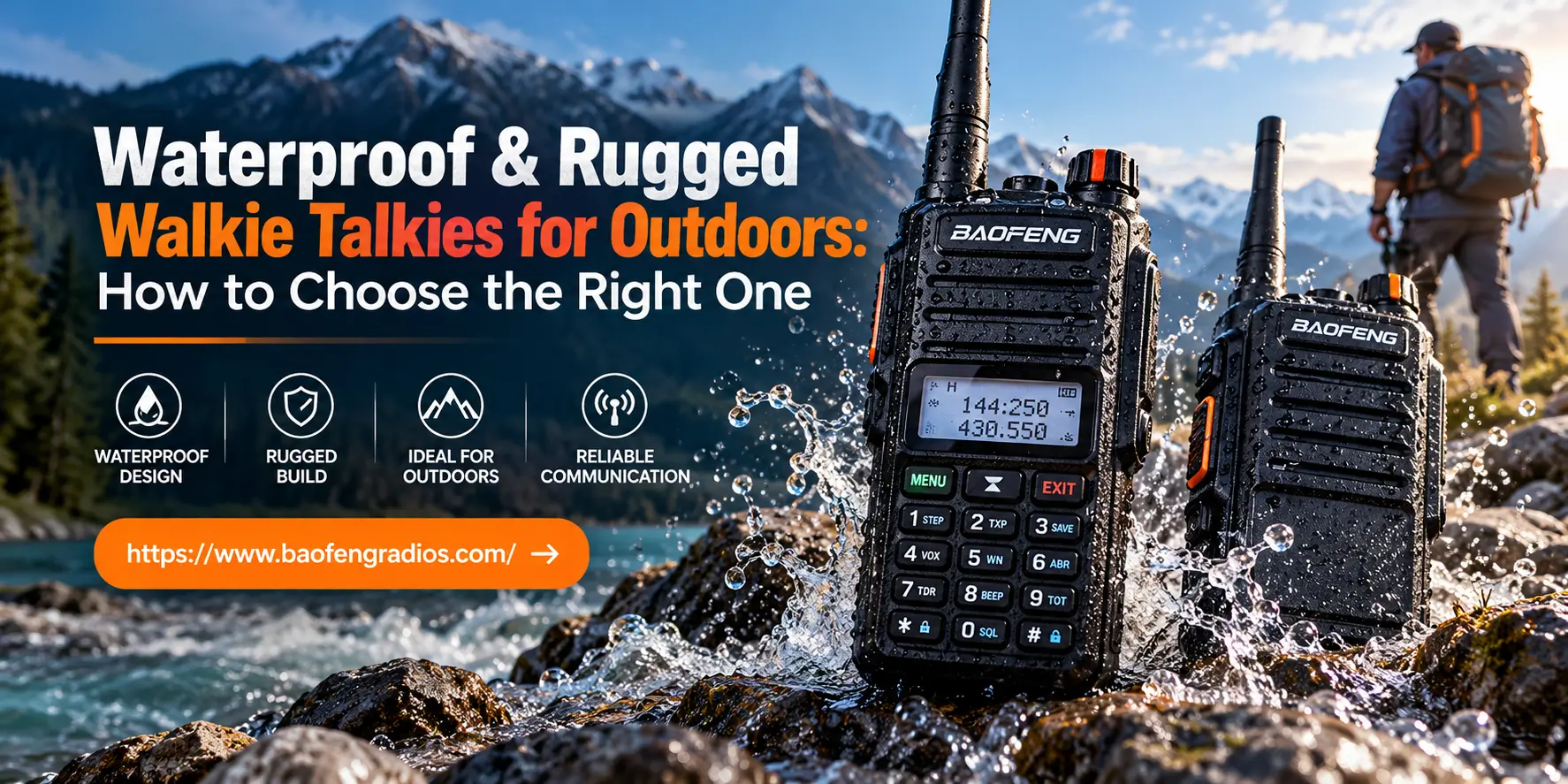
Mountain weather turns fast. A drizzle becomes a downpour, a river crossing gets deeper than expected, and a radio slips out of a pocket onto wet rock. When your phone has no signal, your walkie talkie is the only link to your group.
That is why waterproof walkie talkies are standard kit for trekking groups, camp operators, adventure guides, farm and estate teams, and outdoor event crews. This guide covers what “waterproof” actually means, which features matter, and how to choose.
Why Regular Radios Fail Outdoors
Standard handsets are built for offices and warehouses. Outdoors they face:
Rain and humidity that get into speaker grilles and battery contacts
Dust and mud on trails, quarries and construction sites
Drops onto rock, gravel or concrete
Temperature swings between cold mornings and hot afternoons
A rugged walkie talkie is designed to handle all of these, so it keeps working when conditions get rough.
IP Ratings Explained (Before You Buy)
The “IP” code tells you how well a radio is sealed. The first digit covers dust, the second covers water.
Rating | What it means in practice |
|---|---|
IPX4 | Resists splashes from any direction. Fine for light rain. |
IP54 | Dust-protected and splash-resistant. Good for dusty sites with occasional rain. |
IP67 | Dust-tight and survives temporary immersion (up to about 1 metre for 30 minutes). |
IP68 | Dust-tight and rated for longer or deeper submersion, as specified by the manufacturer. |
Tip: Check the exact rating on the product page. “Water-resistant” and “waterproof walkie talkie” are not the same thing. If your use involves river crossings, boats or monsoon treks, look for IP67 or higher.
7 Features to Look for in Rugged Outdoor Walkie Talkies
Verified IP rating. Look for IP67 or above for heavy exposure.
Shock-resistant body. Rubberised edges and a tough casing handle drops and knocks.
Battery life. Long days off-grid need a high-capacity battery. Carry a backup or a power bank for field and outdoor teams for top-ups.
Clear audio. Wind, water and engines are loud. Look for a strong speaker and noise handling.
Glove-friendly controls. Big push-to-talk buttons and knobs work with wet or gloved hands.
Built-in torch. Useful for dusk starts, camp setups and emergencies.
Secure belt clip and lanyard points. A radio that stays attached is a radio you don’t lose.
Licence-Free or Licensed: What Do You Need?
Many outdoor teams prefer licence-free walkie talkies because they are ready to use straight out of the box, with no paperwork. For short-to-medium range group communication, that is often all you need. If you aren’t sure which category fits you, read our guide on licence-free vs licensed walkie talkies in India.
Analog or Digital for Outdoor Use?
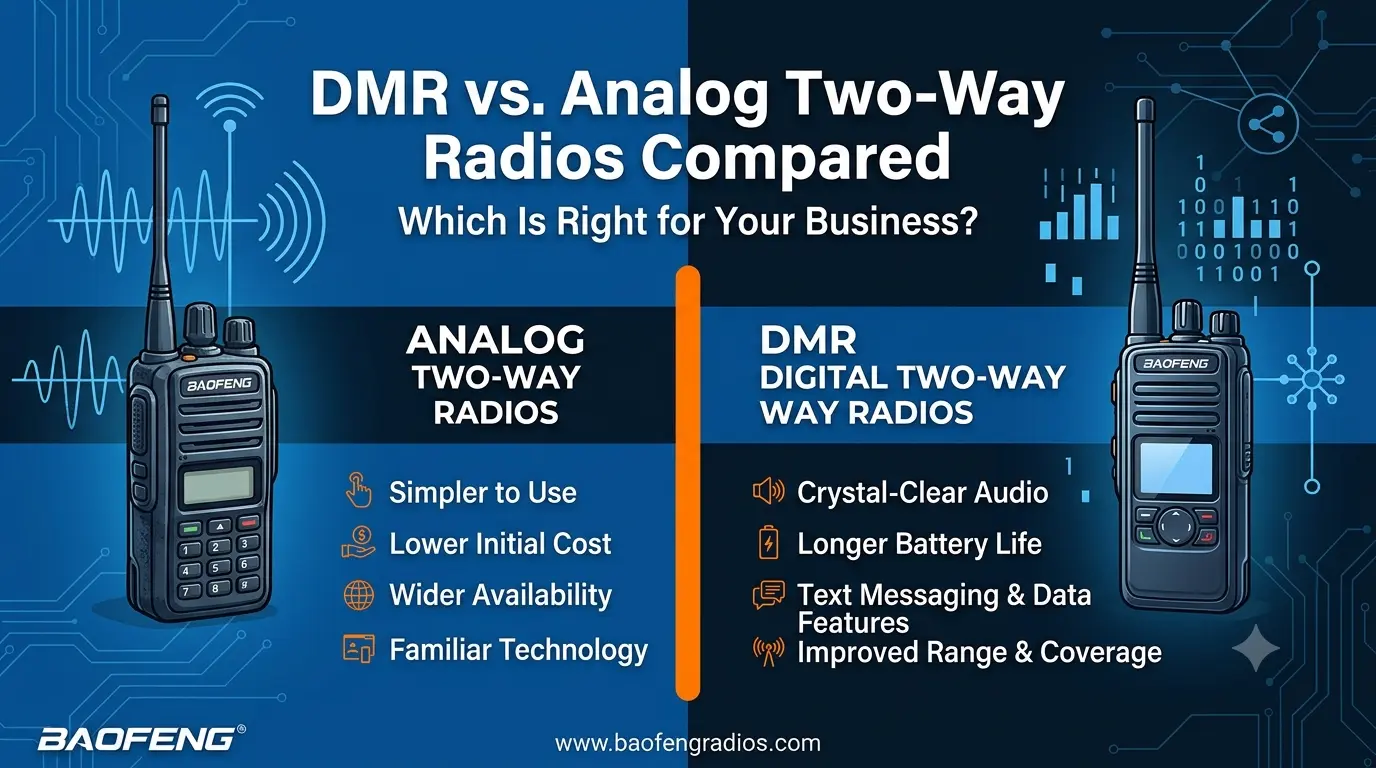
For simple group communication on a trek or at a campsite, analog radios are reliable and easy to use. Larger operations, such as resorts, estates and event teams, may benefit from digital features like clearer audio and better channel management. See our comparison of DMR vs analog two-way radios to decide which suits your team.
Who Uses Waterproof Walkie Talkies?
Trekking and adventure groups: keep the lead guide and sweeper connected across long, spread-out trails.
Camping and resort operators: coordinate tents, kitchens and activities across large grounds.
Farms, plantations and estates: talk across fields where mobile networks are weak.
Construction and site teams: stay in touch in dust, rain and heavy machinery noise.
Event and security crews: keep communication steady through any weather.
Care Tips to Make Your Radio Last
Rinse with clean water after exposure to mud or salt water, then dry the exterior.
Check the battery cover seal before every trip. Dirt or a misaligned cover can break the waterproofing.
Keep the antenna and connectors snug before getting wet.
Charge fully the night before and keep a spare power source handy.
Avoid storing in direct heat, such as a closed car in summer.
Final Thoughts
The right waterproof walkie talkies won’t just survive bad weather. They keep your whole team safe and coordinated when it matters most. Match the IP rating to your environment, prioritise battery life and audio clarity, and pick the licence type that suits your use case.
Ready to gear up? Browse our full range of waterproof and rugged walkie talkies built for outdoor use.
FAQs
What is the best waterproof rating for a walkie talkie?
IP67 is a solid choice for most outdoor use. Choose IP68 if the radio may be submerged for longer.
Are waterproof walkie talkies also dustproof?
Ratings with a “6” as the first digit (IP67, IP68) are dust-tight. IPX4 only covers water, not dust.
Do I need a licence to use waterproof walkie talkies in India?
Licence-free models are available for everyday use. See our licence guide for details.
How do I keep my walkie talkie charged on long trips?
Carry spare batteries or a rugged power bank.